Walnut Creek Sequoia
2405 Shadelands Drive
Walnut Creek, CA 94598
United States

2405 Shadelands Drive
Walnut Creek, CA 94598
United States
101 Sand Creek Road
Brentwood, CA 94513
United States
(925) 939-8585
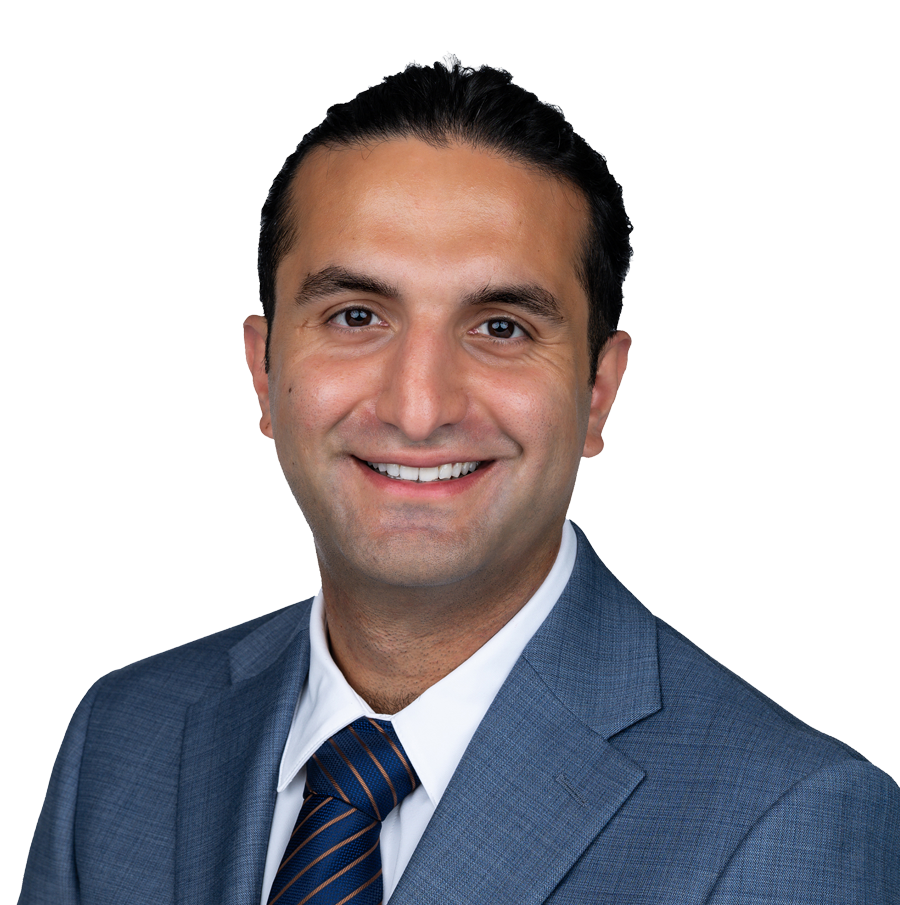
Dr. Roman Rahmani is a fellowship-trained orthopedic spine surgeon specializing in the comprehensive treatment of cervical, thoracic, and lumbar spine conditions. His areas of focus include degenerative spine conditions, adult spinal deformity, motion preservation, minimally invasive spine surgery, and revision spine surgery. His practice emphasizes minimally invasive techniques and preserving normal motion whenever possible, including disc replacement, as well as advanced reconstructive and fusion procedures when appropriate. Dr. Rahmani incorporates robotic assistance and surgical navigation to plan around each patient’s anatomy and guide the placement of spinal implants. He uses these tools as part of a carefully considered approach to spine surgery, including complex deformity and revision cases.
Dr. Rahmani was drawn to spine surgery by the close relationship between spinal health, mobility, and lifelong quality of life as well as a field that continues to evolve rapidly. He believes successful treatment is not simply about improving an MRI or performing an operation, but helping patients return to work, exercise, family, and the activities that are important to them.
Dr. Rahmani graduated cum laude with a degree in biochemistry from SUNY Geneseo in New York before earning his Doctor of Osteopathic Medicine degree from the University of New England College of Osteopathic Medicine. He completed his orthopedic surgery residency at Bon Secours Mercy Health St. Vincent Medical Center in Toledo, Ohio, followed by the surgical spine fellowship at Hoag Orthopedic Institute in Orange County, California, where he received extensive training across the spectrum of cervical, thoracic, and lumbar spine surgery.
Research remains an important part of Dr. Rahmani’s practice. His work has examined long-term outcomes following spine surgery, disc replacement, minimally invasive and endoscopic techniques, and the integration of emerging surgical technologies. He brings that evidence-based perspective to evaluating new techniques while maintaining a strong foundation in anatomy, surgical fundamentals, and individualized decision-making.
Outside of medicine, Dr. Rahmani has a passion for the outdoors and an active lifestyle. He enjoys skiing, scuba diving, hiking, traveling, and spending time with family and friends.
Dr. Rahmani has contributed to peer-reviewed research examining long-term outcomes following cervical and lumbar spine surgery, artificial disc replacement, minimally invasive techniques, adult spinal deformity, and surgical innovation. His research reflects an emphasis on evidence-based decision-making, appropriate surgical indications, and long-term patient outcomes.
Ten-Year Delayed Reoperation Following Single-Level Lumbar Total Disc Replacement Versus Stand-Alone Lumbar Interbody Fusion
Rahmani R, et al.
Spine Open | Accepted for Publication, October 2026
Fusion Construct Length Is Associated With Increased Risk of Delayed Reoperation Following Cervical and Lumbar Fusion
Rahmani R, et al.
Global Spine Journal | 2026
Fully Endoscopic Posterior Cervical Foraminotomy: A Systematic Review of Clinical and Surgical Outcomes
Rahmani R, et al.
Asian Journal of Neurosurgery | 2026
Reclaiming Anatomic Intuition: Integrating Freehand Precision in the Era of Navigation
Rahmani R, et al.
International Journal of Spine Surgery | 2026
Intradiscal Cutibacterium acnes Prevalence Immediately Prior to Fusion or Total Disc Replacement Device Implantation: A Prospective Registry Study of Cervical and Lumbar Discs
International Journal of Spine Surgery | 2026
S2 Alar-Iliac Screws Are Superior to Traditional Iliac Screws for Spinopelvic Fixation in Adult Spinal Deformity: A Systematic Review and Meta-Analysis
Rahmani R, et al.
Spine Deformity | 2024
The Efficacy of Prophylactic Vertebroplasty for Preventing Proximal Junctional Complications After Spinal Fusion: A Systematic Review
Rahmani R, et al.
The Spine Journal | 2022
Chemical Prophylaxis and Venous Thromboembolism Following Elective Spinal Surgery: A Systematic Review and Meta-Analysis
Rahmani R, et al.
North American Spine Society Journal | 2024
Tranexamic Acid Dosing Strategies and Blood Loss Reduction in Multilevel Spine Surgery: A Systematic Review and Network Meta-Analysis
Rahmani R, et al.
North American Spine Society Journal | 2021
Response to the Letter to the Editor Regarding "Fusion Construct Length Is Associated with Increased Risk of Delayed Reoperation Following Cervical and Lumbar Fusion."
Global Spine Journal | 2026
Placement of Spinal Cord Stimulation Paddle Leads in the Thoracic Spine Using En Bloc Laminoplasty: A Technical Note
World Neurosurgery X | 2024
Evaluating the Utility of Post-Reduction Imaging for Simple Hip Joint Dislocations: Is Computed Tomography Always Necessary?
Journal of Orthopaedics | 2023
The Effect of Instrumentation Staging on Patient Outcomes in Pyogenic Vertebral Osteomyelitis: A Systematic Review
North American Spine Society Journal | 2021
A Quality Improvement Project to Address the Challenges Surrounding Zoledronic Acid Use in Children
Journal of Bone and Mineral Metabolism | 2021
Female Sex and Obesity Are Risk Factors for Inadequate Calcium Intake in Youth With Type 1 Diabetes
Frontiers in Clinical Diabetes and Healthcare | 2021
Cervical myelopathy occurs when pressure on the spinal cord in the neck begins to affect its normal function.
The spinal cord carries important signals between the brain and the rest of the body. When it becomes compressed, these signals may be disrupted, affecting strength, balance, coordination, and walking.
As the discs and joints of the lower back change with age, one vertebra may gradually shift forward relative to the vertebra below it. This condition is called degenerative lumbar spondylolisthesis.
In some patients, this slippage can narrow the space around nearby nerves, leading to a condition called spinal stenosis.


