Leg Length Discrepancy

What Is Leg Length Discrepancy?
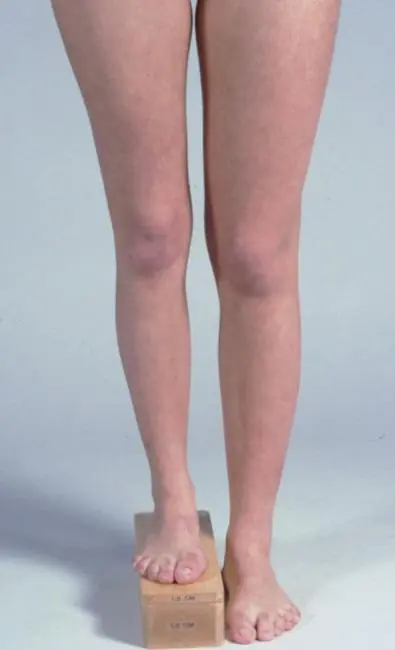
Leg length discrepancy (LLD) is a condition where one leg is shorter than the other, leading to various musculoskeletal issues and causing an imbalance in the body's alignment and movement patterns. This condition can range from mild (with minimal impact on function) to severe (significantly affecting mobility and quality of life). Leg length discrepancy can affect people of all ages, from children to adults, and may be either congenital (present at birth) or acquired (developing later in life).
The causes of leg length discrepancy vary. Congenital factors mean some individuals are born with a natural leg length difference due to genetic factors or developmental issues during fetal growth that affect bone formation. Injuries and trauma are common causes—fractures or injuries during childhood or adolescence can lead to uneven bone growth if the growth plate is damaged, resulting in one leg developing differently than the other. Various medical conditions can also contribute to LLD, including scoliosis (abnormal curvature of the spine that can affect pelvic alignment), hip dysplasia (developmental hip joint problems), bone infections that damage growth plates, and conditions affecting bone growth or development.
Symptoms of leg length discrepancy depend on the severity of the difference. Patients may exhibit gait abnormalities, such as walking with an uneven gait or noticeable limp. The body's attempt to compensate for the imbalance can cause discomfort in the lower back, hips, or knees, as joints and muscles work harder to maintain balance. Uneven shoe wear is often noticeable, with one shoe showing significantly more wear than the other. Children with LLD may experience delays in walking or difficulty with balance. Over time, untreated leg length discrepancy can lead to joint pain, arthritis, and spinal problems as the body continuously compensates for the imbalance.

Nonsurgical Treatments
For mild to moderate leg length discrepancies, nonsurgical treatments can effectively address symptoms and improve function. Our doctors offer several conservative approaches to manage LLD without surgery.
Lifestyle Modifications
Activity modifications may be helpful to reduce stress on joints affected by the leg length difference. Understanding proper body mechanics and making adjustments to daily activities can help minimize compensatory patterns that lead to pain. Maintaining a healthy weight reduces overall stress on the musculoskeletal system.
Medications & Injections
While medications don't correct the leg length difference, pain relievers may be used to manage discomfort in the back, hips, or knees that results from compensatory movement patterns. Anti-inflammatory medications can help reduce inflammation in joints that are experiencing extra stress.
Physical & Occupational Therapy
Physical therapy plays a crucial role in managing leg length discrepancy. Targeted exercises can improve muscle strength and joint flexibility, aiding in better alignment and reducing compensatory movement patterns. Therapists work on strengthening muscles that help stabilize the pelvis and spine, improving overall balance and gait mechanics. Stretching exercises help maintain flexibility in muscles and joints that may become tight due to altered mechanics.
Supportive & Assistive Devices
Orthopedic shoe lifts are the most common nonsurgical treatment for mild leg length discrepancies. These specially designed lifts elevate the shorter leg, helping to level the pelvis and reduce compensatory stress on joints and the spine. Customized insoles can provide additional support and balance for individuals with LLD, redistributing pressure more evenly across the foot. For children with LLD, monitoring and adjusting shoe lifts as they grow is important to maintain proper alignment throughout development.
Surgical Treatments
When nonsurgical interventions are inadequate and the leg length discrepancy significantly impacts function and quality of life, surgical options may be considered. The ideal age for surgical intervention and the specific procedure chosen depend on multiple factors including the patient's age, the severity of the discrepancy, and whether the bones are still growing.
Epiphysiodesis
This procedure is typically performed in children and adolescents who are still growing. Epiphysiodesis involves surgically slowing down or stopping the growth of the longer limb, allowing the shorter leg to catch up over time. The procedure targets the growth plates (epiphyses) of the longer leg, using surgical techniques to halt growth at these sites. Timing is critical for this procedure—it must be performed while the child still has sufficient growth remaining for the shorter leg to equalize. This approach is generally preferred for younger patients with moderate discrepancies.
Ilizarov Method
The Ilizarov method, pioneered by Dr. Gavriil Ilizarov, is a versatile and time-tested technique applicable to various limb lengthening scenarios. This surgical approach involves the use of an external fixator—a metal frame attached to the bone with pins and wires. Through a process called distraction osteogenesis, the bone is gradually stretched over time, with the fixator carefully adjusted to create small gaps. As these gaps are created, new bone naturally grows to fill them, effectively lengthening the limb. The Ilizarov method can be used in both pediatric and adult patients and is particularly useful for larger discrepancies. While the external fixator must be worn for several months, this technique allows for precise control over the lengthening process and can correct significant differences.
Precice Internal Magnetic Lengthening Nail
This revolutionary device has transformed the treatment of leg length discrepancy and represents the latest advancement in limb lengthening technology. The Precice nail is an internal device implanted within the bone and controlled with an external magnetic device. Unlike the Ilizarov method, there is no external apparatus—the entire lengthening mechanism is contained within the bone. The magnetic technology allows precise distraction and deformity correction without any external hardware. Patients can move all joints during the lengthening process, significantly improving quality of life compared to external fixation methods. The device can be controlled by the patient at home using the external magnetic remote, gradually lengthening the bone according to a prescribed schedule. This approach offers several advantages including reduced infection risk, improved cosmetic outcome, greater patient comfort, and the ability to remain more active during treatment. Our expert in this procedure, Dr. Jeffrey Kanel, has extensive experience and would be happy to provide consultation regarding use of this innovative device.
The choice of surgical procedure depends on several factors including patient age, severity of the discrepancy, whether growth plates are still open, patient and family preferences, and lifestyle considerations. While nonsurgical interventions are often explored first, the ideal timing for surgical intervention varies. Pediatric patients may undergo procedures like epiphysiodesis to take advantage of remaining growth, while the Ilizarov method or Precice nail can be applicable in both pediatric and adult cases when significant lengthening is required. Consulting with a skilled orthopedic doctor is crucial to determine the most appropriate treatment approach. Our experts, including doctors with extensive experience in advanced limb lengthening techniques, are available to provide consultations and discuss the most suitable options for each individual case.
Sources:
American Academy of Orthopaedic Surgeons. (https://orthoinfo.aaos.org)
Paley, D. (2000). Problems, obstacles, and complications of limb lengthening by the Ilizarov technique. Clinical Orthopaedics and Related Research, 379, 8-18.
Ganger, R., & Radler, C. (2008). Congenital limb length discrepancy. International Orthopaedics, 32(5), 649-654.